

Top 8 WordPress Web Development Trends Followed in 2026

-
Updated Date
Aug-20-2026
-
Views
2 Min Read
-
Author: PromotEdge Digital
-
Updated Date: Aug-20-2026
-
Views: 2 Min Read
-
Author: Anindita Barik
Discover the latest WordPress web development trends shaping 2026, from AI tools and advanced SEO to responsive design and cutting-edge features that boost performance, engagement, and competitiveness in today’s digital landscape.
WordPress continues to be the world’s most popular website platform, powering more than 40% of all websites globally. Over the years, its extensive ecosystem of themes, plugins, and development tools has transformed the way businesses and individuals build and manage their online presence.
Whether it’s a personal blog, an eCommerce store, or a large enterprise website, WordPress offers the flexibility and scalability needed to support projects of every size. This adaptability is one of the main reasons it remains the preferred choice for developers, marketers, and business owners alike.
As the platform evolves, new technologies and user expectations are shaping the future of WordPress development. In 2026, some of the most significant trends include AI-powered plugins, headless WordPress architecture, accessibility-first design, advanced SEO capabilities, blockchain integration, Progressive Web Apps (PWAs), real-time collaboration tools, and sustainable hosting practices.
Understanding these developments is essential for businesses looking to stay competitive online. This guide explores each trend in detail, explaining what it is, why it matters, and how WordPress websites are already using it today.
What Are the Top WordPress Web Development Trends in 2026?
As WordPress continues to evolve, several development trends are shaping how modern websites are built, managed, and optimized in 2026. Businesses are moving beyond traditional website development and adopting technologies that improve performance, streamline content management, strengthen security, and create better user experiences.
This shift has accelerated the adoption of AI-powered tools, headless WordPress architecture, accessibility-focused design practices, Progressive Web Apps (PWAs), advanced SEO capabilities, real-time collaboration features, and sustainable hosting solutions.
Understanding these trends can help businesses make informed decisions when planning new WordPress projects or upgrading existing websites to meet changing user expectations and digital requirements.
Trend 1: AI-Powered WordPress Plugins and Tools
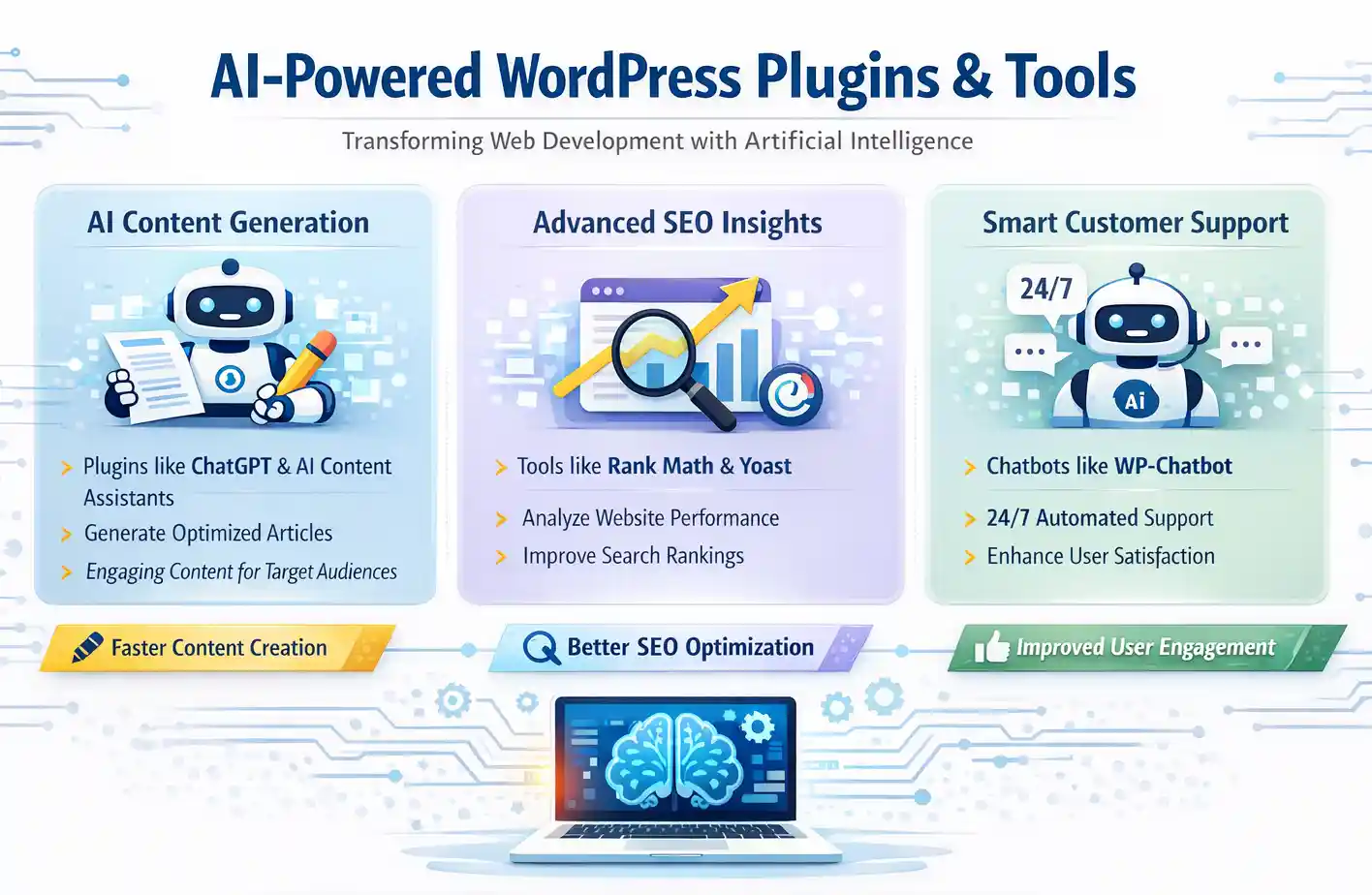
Artificial intelligence is becoming a practical part of WordPress website development rather than an experimental feature. In 2026, AI-powered WordPress plugins are helping website owners automate content generation, improve on-page SEO analysis, and deliver 24/7 customer support through intelligent chatbots.
AI’s role in WordPress now goes far beyond simple task automation. It is influencing every stage of website management, from content planning and SEO optimization to customer interactions and performance analysis. By handling repetitive processes and providing actionable insights, AI-powered tools help website owners work more efficiently while delivering more relevant and personalized experiences to users.
As a result, artificial intelligence has emerged as one of the most influential WordPress web development trends in 2026.
Key advancements include:
- AI Content Generation: Plugins like ChatGPT and AI-based content assistants quickly produce optimised, engaging content tailored to specific audiences.
- Advanced SEO Insights: Tools such as Rank Math and Yoast utilise machine learning to analyse website performance, provide actionable SEO suggestions, and improve search rankings.
- Smart Customer Support: Chatbot integrations like WP-Chatbot offer 24/7 assistance, boosting user satisfaction and decreasing bounce rates.
AI tools reduce manual errors, cut production time, and raise the quality bar for content and customer experience — making them one of the most practical investments in modern WordPress development.
According to Stanford’s 2026 AI Index Report, AI systems achieved near-human performance on several software engineering benchmarks, reflecting the growing role of AI-assisted development tools. This progress is accelerating the adoption of AI-powered WordPress plugins that streamline content creation, SEO optimisation, and customer engagement.
Trend 2: Headless WordPress Architecture
Headless WordPress is gaining traction as businesses look for faster, more flexible ways to deliver digital experiences. Unlike a traditional WordPress setup, where the backend and frontend are tightly connected, a headless architecture separates the content management system from the presentation layer.
WordPress continues to handle content creation and management, while developers build the frontend using modern JavaScript frameworks such as React, Vue, or Angular. This approach gives development teams greater control over design and functionality while improving website performance.
Faster page load times, enhanced user experiences, and the ability to deliver content seamlessly across websites, mobile applications, and other digital platforms are some of the key reasons why headless WordPress has become an important web development trend in 2026.
This decoupling of the frontend and backend brings several transformative benefits:
- Faster Performance: Separating content management from the frontend reduces many of the performance limitations associated with traditional WordPress websites, helping pages load faster and creating a smoother user experience.
- Design Flexibility: Developers can create highly customized and interactive user interfaces without being restricted by standard WordPress theme structures, allowing designs to align more closely with business and user requirements.
- Scalability and Integration: Headless WordPress supports advanced applications, third-party integrations, and content delivery across multiple digital platforms, making it well suited for businesses with evolving operational needs.
Headless WordPress is especially valuable for organisations that place a strong emphasis on website performance and need to deliver content across multiple digital platforms. Content created and managed within WordPress can be published simultaneously to websites, mobile applications, and even IoT devices, helping businesses maintain consistent branding and messaging across every touchpoint.
As adoption continues to grow, more developers are turning to headless architecture to build sophisticated, highly responsive digital experiences. This shift is driving the development of faster and more flexible WordPress websites that align with modern user expectations.
With its ability to support performance, scalability, and multi-platform content delivery, headless WordPress is expected to remain a key web development trend throughout 2026.
Trend 3: Focus on Accessibility and Inclusive Design
In 2026, accessibility is becoming a key focus area in WordPress development as businesses work to make their websites usable for a broader audience, including people with disabilities. Greater emphasis is being placed on WCAG compliance, screen reader optimisation, and accessible themes and plugins that help websites meet accessibility standards while supporting legal compliance.
As accessibility requirements continue to gain importance, it is no longer viewed as an optional feature in website development. Instead, it has become a fundamental aspect of modern web design, helping organisations create more inclusive digital experiences while delivering both ethical and legal benefits.
- WCAG Compliance: Meeting the Web Content Accessibility Guidelines (WCAG) ensures equal access to information for all users. WordPress developers are integrating these standards from the outset rather than retrofitting later.
- Accessible Themes and Plugins: More WordPress tools now prioritise accessibility out of the box — making it straightforward for businesses to launch inclusive sites without custom workarounds.
- Enhanced Screen Reader Support: Semantic HTML, ARIA roles, and clear navigation structures make WordPress sites more compatible with assistive technologies used by visually impaired users.
By meeting these standards, businesses broaden their audience and ensure compliance with laws such as the Americans with Disabilities Act (ADA) thereby, making accessibility a legal and commercial priority, not just an ethical one.
The Web Accessibility Initiative (WAI) reports that approximately 1 in 6 people globally live with some form of disability — making accessible design essential for reaching the full potential audience of any website.
Trend 4: Advanced SEO Optimization Features
WordPress is continuing to evolve alongside modern search engine requirements, making SEO a central part of the development process rather than an afterthought.
In 2026, features such as Core Web Vitals optimization, simplified schema markup integration, and voice search optimization are helping websites improve their search visibility while reducing the technical complexity traditionally associated with SEO.
As search engines place greater emphasis on website performance, structured data, and conversational search behaviour, businesses need websites that can adapt to these changes.
WordPress is responding by providing built-in capabilities and tools that make it easier to align with current SEO best practices, helping website owners improve rankings, attract qualified traffic, and maintain a competitive presence in search results.
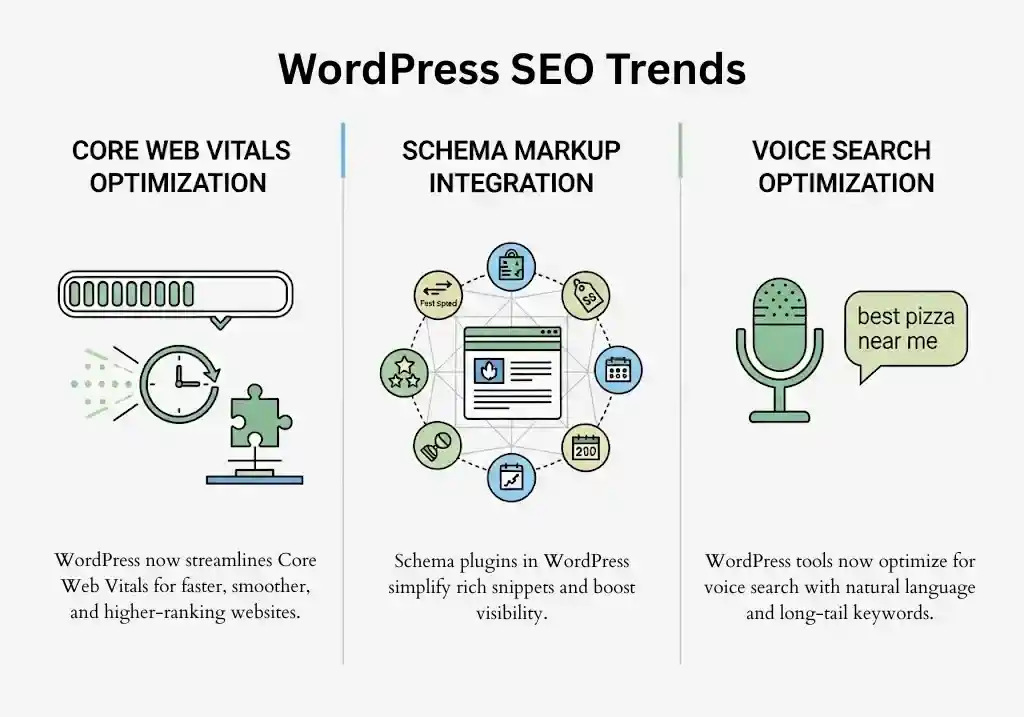
Core Web Vitals Optimisation:
Google’s increasing emphasis on page experience has made Core Web Vitals an important part of SEO. Metrics such as site speed, interactivity, and visual stability are now given greater consideration, leading to the introduction of WordPress features that simplify optimisation and support both user experience and search performance.
Schema Markup Integration:
As search engines become more sophisticated in the way they interpret website content, structured data is playing an increasingly important role in SEO. This has driven wider adoption of schema markup, with WordPress plugins simplifying implementation and making it easier for websites to qualify for rich snippets, improve visibility in search results, and attract higher click-through rates.
Voice Search Optimisation:
Voice search is changing the way people interact with search engines, with users increasingly relying on conversational phrases rather than short keyword-based queries. WordPress is adapting to this change with tools that support natural language optimization and long-tail keyword targeting, helping websites remain relevant as search behaviour continues to evolve.
Together, these advanced SEO features are helping WordPress websites stay aligned with modern search requirements, improve discoverability, and drive sustainable organic growth.
Trend 5: Integration of Blockchain in WordPress
In 2026, the integration of blockchain technology supports cryptocurrency payments, tamper-proof data records, and decentralised hosting are providing e-commerce businesses and data-sensitive platforms with greater security, transparency, and control.
Blockchain technology is opening up new possibilities in web development, particularly in areas where security, transparency, and data integrity are important. As these requirements become more relevant across digital platforms, WordPress is beginning to integrate blockchain-based capabilities that support a wider range of website functionalities and use cases.
- Secure Payments:
Blockchain plugins enable WordPress e-commerce websites to accept cryptocurrency payments, offering a secure and transparent transaction process while supporting lower transaction costs and broader global accessibility. - Data Integrity:
By using a decentralised ledger, blockchain helps maintain the integrity of stored data. Sensitive customer information, including financial and personal records, remains protected from unauthorised modifications or access. - Decentralised Hosting:
Blockchain-based hosting provides an alternative to traditional centralised server environments. This approach helps improve uptime, reduces dependency on a single point of failure, and enhances the complete website security.
As blockchain adoption increases, its role within the WordPress ecosystem extends beyond payment processing. Features such as identity verification, NFT integration, and decentralised data storage highlight the technology’s broader potential, which enhances the digital experience one step further.
Trend 6: Progressive Web Apps (PWAs) Built with WordPress
Progressive Web Apps (PWAs) are changing how websites deliver user experiences by combining the accessibility of a website with the functionality of a mobile application. As expectations around speed, reliability, and convenience continue to rise, WordPress is making PWA development more accessible through a growing range of tools and plugins. This approach allows developers to deliver app-like experiences across devices without requiring users to download a separate application.
Key benefits of WordPress PWAs include:
- Offline Access:
Essential content and data can be cached, allowing users to continue accessing parts of the website even when an internet connection is unavailable. - Faster Load Times:
Caching and preloading techniques help pages load more quickly, improving the overall user experience and reducing bounce rates. - Push Notifications:
PWAs can deliver updates, promotions, and announcements directly to users’ devices, creating additional opportunities for engagement and retention.
Plugins such as Super Progressive Web Apps have simplified the implementation process, making PWA functionality accessible without extensive custom development. This allows website owners to achieve app-like performance and engagement while continuing to operate within their existing WordPress environment.
Trend 7: Real-Time Collaboration Features
The need for real-time collaboration continues to increase as content teams become more distributed and websites involve larger groups of contributors. In response, WordPress is expanding its collaboration capabilities in 2026 with features designed to make content creation, review, and management more efficient.
These enhancements help teams work together more effectively while reducing reliance on external communication and project management tools.
Some key features include:
- Simultaneous Editing:
Multiple users can work on the same content at the same time, reducing editing conflicts and improving workflow efficiency across teams. - Integrated Communication Tools:
Built-in chat and feedback features within the WordPress dashboard make it easier to discuss changes, share input, and collaborate without leaving the platform. - Live Updates:
Real-time content previews and updates allow team members to view changes as they happen, helping maintain accuracy and ensuring access to the latest version of content.
For agencies and in-house teams that manage multi-author WordPress websites, these collaboration features help reduce version conflicts, minimise approval bottlenecks, and reduce dependence on third-party project management platforms.
Trend 8: Sustainable Web Development Practices
Sustainability is becoming an important part of web development, and WordPress is no exception. As the environmental impact of digital infrastructure receives greater attention, developers are adopting more efficient approaches to website development and hosting.
Some of the key practices include:
- Energy-Efficient Hosting:
WordPress developers are choosing hosting providers powered by renewable energy sources such as wind and solar power, helping reduce the environmental impact associated with website operations. - Optimised Code:
Developers optimize code to eliminate unnecessary resource usage across websites. By reducing server processing demands and data transfer requirements, they improve performance while lowering the energy consumed by website operations. - Reduced Carbon Footprint:
Carbon tracking tools help measure website emissions, giving developers greater visibility into energy consumption and opportunities to reduce or offset environmental impact.
As sustainability becomes a greater consideration in digital projects, these practices are helping create websites that are not only efficient and high-performing but also more environmentally responsible.
The Website Carbon Calculator estimates that the average webpage produces 0.5g of CO₂ per page view. This means that a site with 10,000 monthly visitors generates around 60kg of CO₂ per year. Optimised WordPress sites can reduce this figure by up to 70%.
How Do You Implement WordPress Web Development Trends on Your Site?
Implementing every new WordPress trend at once is rarely the best approach. A more practical strategy is to evaluate where your website stands today, identify the areas that offer the greatest opportunity for improvement, and introduce changes gradually.
Whether the focus is AI, SEO, accessibility, PWAs, or sustainability, understanding the custom WordPress website development cost associated with each initiative can help prioritise investments and create a more effective implementation roadmap.
Here’s a comprehensive step-by-step checklist to guide you through the implementation:
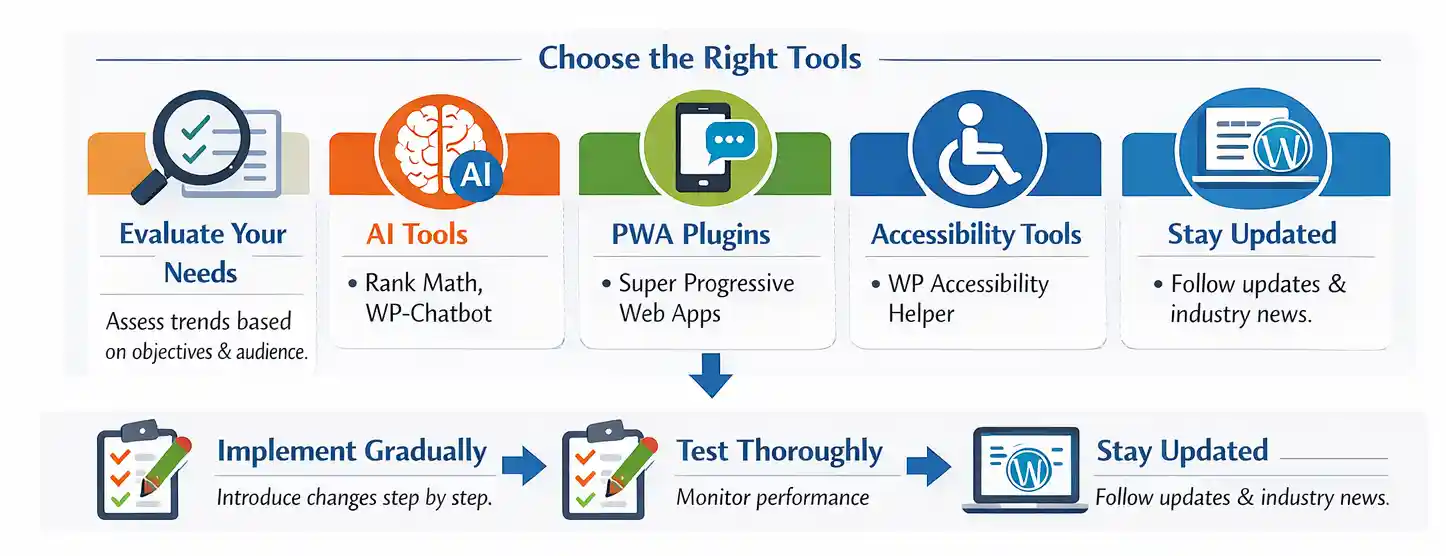
- Evaluate Your Needs:
Before adopting any trend, consider how it supports your business goals and user expectations. Features that improve search visibility, user experience, or operational efficiency typically offer the strongest starting point. - Choose the Right Plugins:
The effectiveness of any implementation depends heavily on the tools selected. Choose plugins that align with the specific functionality you want to introduce. - AI + SEO:
Plugins such as Rank Math and WP-Chatbot can help add AI-powered SEO capabilities and conversational support without extensive development. - PWA:
Super Progressive Web Apps (offline access, push notifications) - Accessibility:
WP Accessibility Helper (WCAG compliance, screen reader support) - Implement Gradually:
Rather than making multiple changes simultaneously, introduce improvements in stages. This makes it easier to measure results, identify issues, and maintain website stability throughout the process. - Test Thoroughly:
Every update should be tested across different devices, browsers, and user scenarios to confirm that performance, functionality, and accessibility remain intact. - Stay Updated:
WordPress continues to evolve, making regular updates and ongoing learning essential. Following WordPress releases, developer communities, and industry resources can help keep your website aligned with current best practices.
For more complex implementations, understanding what WordPress development services include can help determine when professional support may be required to achieve the desired outcome.
So, What Should WordPress Site Owners Prioritise in 2026?
WordPress development in 2026 is being shaped by a clear focus on performance, user experience, accessibility, and long-term sustainability. Technologies such as AI-powered automation, headless architecture, blockchain integration, and accessibility-focused design are becoming part of how modern websites are planned, built, and managed.
Many of the top WordPress development companies are already incorporating these capabilities to help businesses create more efficient, scalable, and future-ready digital experiences.
Businesses do not need to implement every WordPress trend to remain competitive. The real value lies in identifying the developments that support their goals and address user needs.
Whether the focus is on better search performance, stronger security, improved accessibility, or faster user experiences, these advancements offer meaningful opportunities to enhance website performance without starting from scratch.
As WordPress continues to evolve, adopting the right innovations at the right time can help businesses improve performance, grow their online presence, and create more accessible and user-focused digital experiences.
Ready to modernise your WordPress website? Contact PromotEdge Digital for a free consultation. Our WordPress specialists will assess your current website, identify the trends most relevant to your business, and develop a practical roadmap for implementation.
Author Details

Latest Posts
-
 22 / Sep
Digital Marketing Digital Marketing for Ecommerce Brands: The 2027 Growth Playbook
22 / Sep
Digital Marketing Digital Marketing for Ecommerce Brands: The 2027 Growth Playbook -
 15 / Sep
-
04 / Sep
-
 29 / Jul
Search Engine Optimization 6 Enterprise SEO Mistakes That Quietly Cost You Millions
29 / Jul
Search Engine Optimization 6 Enterprise SEO Mistakes That Quietly Cost You Millions -
 24 / Jul




Blogs